
What Is the SR-71 Blackbird?
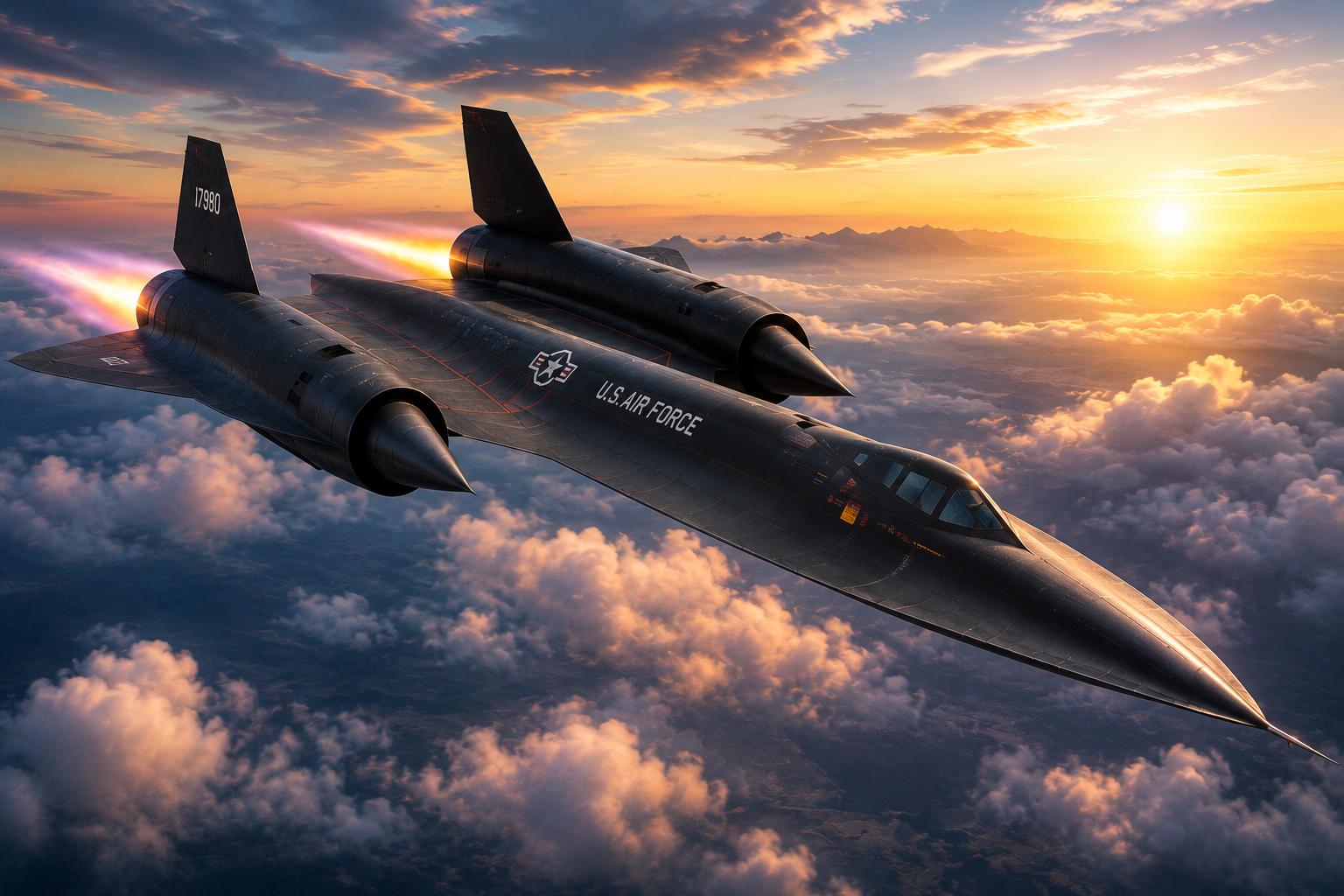
The SR-71 Blackbird is a long-range strategic reconnaissance aircraft developed by Lockheed for the United States Air Force. It was designed to gather intelligence by taking high-resolution photographs and collecting electronic data without entering enemy airspace.
Unlike fighter jets, the Blackbird was never built for air-to-air combat. Its greatest defense was its incredible speed and altitude. Instead of fighting enemy missiles, it simply flew faster than them. This unique strategy made it one of the safest reconnaissance aircraft of its time.
Why Was the SR-71 Blackbird Developed?
During the Cold War, countries needed accurate information about military activities around the world. Traditional spy aircraft became easier to detect, making reconnaissance missions increasingly dangerous.
To solve this problem, engineers designed an aircraft capable of flying above 80,000 feet at speeds exceeding Mach 3. At these extreme altitudes and speeds, enemy radar systems had very little time to react.
The SR-71 quickly became one of the most valuable intelligence tools used during international conflicts and military operations.
The Incredible Speed of the Blackbird
The SR-71 Blackbird could fly at approximately Mach 3.3, or more than 3,500 kilometers per hour. This made it one of the fastest air-breathing aircraft ever built.
Its speed was so impressive that pilots often described it as flying ahead of danger. If enemy missiles were launched, the standard response was usually simple: accelerate.
Because of its extraordinary performance, many speed records set by the Blackbird remain unbeaten even today.
A Unique Aircraft Design
One of the first things people notice about the SR-71 is its unusual shape. Every part of the aircraft was carefully designed to reduce air resistance while remaining stable at very high speeds.
The long nose, angled wings, twin engine nacelles, and sharp body all helped improve aerodynamic performance. Engineers also reduced the aircraft's radar signature, making it harder for enemy systems to detect.
Its sleek black appearance eventually inspired the famous nickname "Blackbird."
Built with Titanium for Extreme Heat
Flying faster than three times the speed of sound creates enormous heat. During high-speed flight, the aircraft's surface became extremely hot because of air friction.
To survive these conditions, engineers built most of the aircraft using titanium, a strong and lightweight metal capable of handling very high temperatures.
This decision made the SR-71 one of the most advanced engineering projects of its era and allowed it to complete missions that few other aircraft could even attempt.
Powerful Pratt & Whitney Engines
The SR-71 was powered by two specially designed Pratt & Whitney J58 engines. These engines were unlike ordinary jet engines because they were optimized for sustained high-speed flight.
As the aircraft accelerated, the engines became more efficient, allowing the Blackbird to cruise comfortably above Mach 3 for extended periods.
This remarkable engine technology played a major role in making the SR-71 one of the fastest operational aircraft in history.
Flying Higher Than Most Aircraft
Most commercial airplanes fly at around 35,000 to 40,000 feet. The SR-71 Blackbird regularly operated above 80,000 feet, placing it far above normal air traffic.
Flying at these altitudes offered several advantages. Enemy aircraft struggled to intercept it, missile systems became less effective, and the Blackbird could observe vast areas during reconnaissance missions.
Its combination of altitude and speed made it extremely difficult to stop.
Secret Reconnaissance Missions
The primary role of the SR-71 was intelligence gathering. It carried advanced cameras and sensors capable of photographing large areas with exceptional detail.
The aircraft completed missions over many regions during the Cold War, collecting information that helped military leaders make important strategic decisions.
Because many missions remained classified for years, the SR-71 became surrounded by mystery and fascination among aviation enthusiasts worldwide.
Why Pilots Loved Flying the Blackbird
Pilots who flew the SR-71 often described it as one of the most exciting aircraft ever created. Although it required extensive training, it offered unmatched performance and reliability.
Flying at extreme speed and altitude demanded constant concentration, but experienced crews appreciated the aircraft's stability and precision.
Many former Blackbird pilots continue sharing stories about their experiences, helping preserve the legacy of this remarkable aircraft.
Amazing Facts About the SR-71 Blackbird
The SR-71 Blackbird is full of fascinating facts that continue to impress aviation enthusiasts. It could travel so fast that it crossed entire countries in only a short time. During high-speed flights, the aircraft expanded because of the extreme heat created by air friction. Engineers even designed it with small fuel leaks while on the ground because the metal expanded tightly once the aircraft reached cruising speed. Its advanced cameras could capture highly detailed images from incredible altitudes, making it one of the most successful reconnaissance aircraft ever built.
How the Blackbird Escaped Enemy Missiles
Unlike fighter jets that rely on weapons to defend themselves, the SR-71 used speed and altitude as its main protection. When enemy radar detected the aircraft and missiles were launched, the crew often increased speed instead of changing direction. Flying above 80,000 feet at more than Mach 3, the Blackbird could outrun most missile systems of its time. This strategy proved highly effective and helped the aircraft safely complete many dangerous reconnaissance missions.
Record-Breaking Speed Achievements
The SR-71 Blackbird set multiple aviation records that still stand today. It achieved speeds exceeding 3,500 km/h (about 2,193 mph) and became the fastest operational air-breathing reconnaissance aircraft ever built. It also completed long-distance flights in record times, demonstrating its unmatched performance. These achievements made the Blackbird one of the greatest engineering successes in aviation history and earned it worldwide recognition among pilots, engineers, and historians.
Why the SR-71 Was Retired
Although the Blackbird remained highly capable, several factors led to its retirement. Operating the aircraft required significant maintenance, specialized equipment, and highly trained crews, making missions expensive. Advances in satellite surveillance and modern intelligence systems also reduced the need for manned reconnaissance flights. Despite its retirement, many experts believe the SR-71 still represents one of the most remarkable aircraft ever developed because no direct replacement has matched its unique combination of speed, altitude, and endurance.
Can Any Aircraft Replace the SR-71?
Many modern aircraft have introduced advanced stealth technology and sophisticated sensors, but none have completely replaced the SR-71 Blackbird's role. Modern drones can perform long surveillance missions, while stealth aircraft reduce radar detection. However, the Blackbird's ability to combine extreme speed, very high altitude, and long-range reconnaissance remains unmatched. Researchers continue working on hypersonic aircraft that may eventually reach similar or even greater performance levels.
The Blackbird's Legacy in Modern Aviation
The SR-71 Blackbird changed aerospace engineering forever. Technologies developed for the aircraft influenced later military programs, high-speed research, and even space exploration. Engineers learned valuable lessons about heat-resistant materials, advanced aerodynamics, engine performance, and navigation systems. Today, many aerospace companies continue studying Blackbird technology when designing future hypersonic aircraft capable of flying faster than Mach 5.
Why Aviation Fans Still Admire the Blackbird
More than fifty years after its first flight, the SR-71 Blackbird continues to inspire millions of aviation fans worldwide. Museums proudly display the aircraft, documentaries explore its history, and former pilots regularly share their experiences. Its combination of beauty, speed, innovation, and mystery makes it one of the most admired aircraft ever built. The Blackbird represents a time when engineers pushed technology beyond what many people believed was possible.
Conclusion
The SR-71 Blackbird remains one of the greatest achievements in aviation history. Its incredible speed, advanced engineering, and successful reconnaissance missions made it a legendary aircraft that still captures the imagination of people around the world. Even though it was developed decades ago, many of its records and technological innovations continue to impress engineers and aviation experts today.
Whether you are interested in military history, aerospace engineering, or record-breaking aircraft, the Blackbird offers an amazing story of innovation and determination. If you enjoy informative guides like this, visit https://freelivecoupons.com to explore more technology articles, shopping guides, and discover the latest verified coupon codes and exclusive online deals from popular stores.
Frequently Asked Questions (FAQs)
1. What was the main purpose of the SR-71 Blackbird?
The SR-71 Blackbird was designed to collect intelligence through high-speed reconnaissance missions.
2. How fast could the SR-71 Blackbird fly?
It reached approximately Mach 3.3, making it one of the fastest operational air-breathing aircraft ever built.
3. Why was the SR-71 painted black?
The black coating helped reduce heat generated during high-speed flight while also giving the aircraft its famous appearance.
4. Did the SR-71 carry weapons?
No. Its primary defense was its exceptional speed and altitude rather than offensive weapons.
5. Why was the SR-71 retired?
High operating costs, changing military requirements, and advances in satellite technology contributed to its retirement.
6. Can modern fighter jets fly faster than the SR-71?
Most modern fighter jets cannot match the SR-71's sustained maximum speed.
7. Where can you see the SR-71 today?
Several SR-71 aircraft are displayed in aviation museums across the United States.